The short answer
A data center needs as much land as its power, its phasing plan and its county demand, and the buildings are the smallest part of that. In our table of campuses that publish both their site area and their power, the median is 0.47 acres per megawatt. The gigawatt campuses going up on open farmland and ranch land are roomier, at a median of 0.86 acres per MW. Dense sites near cities, where land is expensive and the buildings stack, use a fraction of that: a median of 0.18 acres per MW.
Turned into parcel sizes, that gives a rough ladder. A single building for one company’s servers, or a small edge site, can work on a few acres of industrial land. A campus in the low hundreds of megawatts, which is what most developers are chasing outside the hyperscalers, typically needs something in the range of 50 to 300 acres. A campus planned for a gigawatt or more takes roughly 1,000 acres and sometimes several times that. The purchases behind those numbers are real: among 38 data center land deals we have tracked, the median parcel is 168 acres, and parcels range from 13 to 2,069 acres.
The rest of this guide shows where those numbers come from, why a single rule of thumb misleads, what actually fills the land on a campus, and what the answer means if you own acreage and wonder whether it is enough.
Why “acres per megawatt” is the right unit, and where it breaks
Ask how big a data center is and you will hear three different answers: the floor area of its buildings, the acreage of its site, or its power. Of the three, power is the one that matters to a buyer of land, because power is what the land is being bought for. A developer does not plan a campus around a number of buildings; it plans around the megawatts a utility will deliver and the date it will deliver them, then works out how many buildings and how much land that power can fill. Expressing land per megawatt connects the land to the thing that sets its value.
The trouble is that the megawatt figures companies publish do not measure the same thing. Our table keeps the basis of every figure next to the number, and it has five kinds:
- Critical IT load is the power available to the servers. It excludes cooling and the rest of the building. Vantage gives its Frontier campus in Texas as 1.4 GW of critical IT load.
- Planned capacity is a looser announcement figure. It is often IT load, but the company rarely says so. Meta’s Hyperion campus in Louisiana was announced as 2 GW and its El Paso campus as able to scale to 1 GW.
- Campus electricity draw is the total the site will pull from the grid, cooling included. The New York Times reported that Amazon’s campus near New Carlisle, Indiana, will consume 2.2 GW.
- A utility power allocation is what the utility has agreed to supply to the parcel. The Kota Tinggi site in Johor, Malaysia, came with a 300 MW allocation from Tenaga Nasional Berhad.
- Interconnection capacity is what an existing grid connection can carry. Plug Power sold its Graham, Texas project site together with 164 MW of grid interconnection assets.
A campus quoted on total draw will look denser, measured per megawatt, than an identical campus quoted on IT load, because the draw figure is bigger. The difference is not small: cooling and electrical losses can add a substantial share on top of IT load, depending on the design and the climate. So when you read that a site needs “about an acre per megawatt”, ask which megawatt. In our figures we do not convert one basis into another, because no published document gives us the conversion for these specific campuses. We show the basis and let the spread speak.
There is a second reason a single ratio misleads: time. A campus announced at 1 GW on 1,000 acres will spend years with only its first buildings energised. The land is bought for the end state, and the ratio describes the end state. An owner selling land should expect a buyer to pay for the whole site up front, or to tie it up with an option, even though most of it will be empty fields for years.
What the land is actually used for
People who drive past a finished campus see long, low buildings and assume they fill the site. They rarely do. On the single-storey AI campuses in our table, building floor area equals a median of 8% of the land. Here is where the rest goes.
The substation and the switchyard
A campus of hundreds of megawatts connects at transmission voltage and needs its own substation, often a switching station on the utility side and a substation on the customer side. These are not small. In Prince William County, Virginia, the Piedmont Environmental Council quoted Dominion Energy as saying substations actually require 6 to 10 acres, after noticing that the masterplan drawings for the Digital Gateway showed some as small as three acres. The same masterplan drawings showed 15 substations for 37 data center buildings. At Twin Creeks in Leesburg, Dominion bought the substation site as its own parcel, paying $45 million for it, separately from the 97 acres sold for the data center buildings.
Transmission lines also need room to arrive. A high-voltage line runs in a cleared right of way whose width depends on the voltage, the type of structure and the terrain, and a parcel that must host a new line in and out of its substation loses that strip for anything else. If the utility has to build the line across your land, it usually takes an easement rather than buying the ground, which is a separate negotiation from the sale.
Generator yards, fuel and batteries
Most campuses still keep diesel or gas generators for backup, and some of the newer AI campuses plan on-site generation and battery storage as well. Generators sit in yards next to each building or in a central plant, with fuel storage, setbacks for noise and access roads for fuel trucks. A site that plans its own generation is, in land terms, reserving room for a small power plant.
Cooling plant
Closed-loop systems need chillers and dry coolers, usually on the roof or in yards beside the halls. Evaporative systems need cooling towers and water treatment. Vantage describes Frontier as using a closed-loop chiller system, and Related Digital describes the same for its Michigan site. Both choices take land, and the yards grow as rack densities climb.
Stormwater, wetlands and the land you cannot build on
Hundreds of acres of roof and pavement produce a lot of runoff, and most counties require ponds or other systems to hold it. Wetlands, streams and floodplains inside the parcel are usually off limits or expensive to touch. The New York Times reported that the final number of buildings at Amazon’s New Carlisle campus depended partly on whether the company got permission to build on a 10-acre wetland in the middle of the complex. On a typical farm parcel, waterways and their buffers can remove a meaningful share of the acreage from the buildable total.
Roads, parking, security and staging
Each building needs truck access for equipment deliveries that arrive as oversized loads, a perimeter fence with a clear zone inside it, guard houses, and parking for staff. During construction, a gigawatt campus hosts thousands of workers: Related Digital’s release for its Michigan site speaks of more than 2,500 union construction jobs. They need laydown yards and parking for years, and that land usually comes out of later phases.
Buffers and setbacks
Counties increasingly require data centers to stand back from homes, roads and parks, and to screen themselves with berms and planting. These rules are tightening as opposition grows, and they hit small parcels hardest. A 200-foot setback on every side of a 40-acre square takes a far bigger share of the land than the same setback around 1,000 acres.
Room to grow
Finally, buyers keep land in reserve. Phased campuses are bought whole so that the developer controls the power, the zoning and the neighbours for the entire build. Meta is the clearest example: Fortune reported in February 2026 that it had bought roughly 1,400 more acres next to the original 2,250-acre Hyperion site, and by July reports of the expanded site ranged from more than 3,200 acres to about 4,000.
The campus table: acreage against power
The table below lists every campus we could find where a public document states the site area and either the power or the planned floor area. Each row comes from a named source, and acres per MW and floor area per acre are calculated here from the published figures. Where a source does not publish a number, the cell says so.
| Campus | Acres | MW | MW measures | Acres per MW | Floor area, sq ft | Floor area ÷ land |
|---|---|---|---|---|---|---|
| HyperionMeta · Richland Parish, Louisiana | 2,250 | 2,000 | planned capacity (original plan) | 1.13 | 4M (more than) | 4% |
| Prince William Digital Gateway (whole corridor)Several landowners and developers · Prince William County, Virginia | 2,100 | not published | not published | — | 27M (up to) | 30% |
| FrontierVantage Data Centers · Shackelford County, Texas | 1,200 | 1,400 | critical IT load | 0.86 | 3.7M (more than) | 7% |
| New Carlisle campus (Project Rainier)Amazon Web Services · New Carlisle, Indiana | 1,200 | 2,200 | campus electricity draw | 0.55 | not published | — |
| El Paso data centerMeta · El Paso, Texas | 1,042 | up to 1,000 | planned capacity | 1.04 | 1.2M (first phase) | 3% |
| Digital Gateway (Compass portion, as filed)Compass Datacenters · Prince William County, Virginia | 825 | not published | not published | — | 10.5M (up to) | 29% |
| Digital Gateway (QTS portion, as filed)QTS Data Centers · Prince William County, Virginia | 800 | not published | not published | — | 7.9M (about) | 23% |
| Fairwater (first phase)Microsoft · Mount Pleasant, Wisconsin | 315 | not published | not published | — | 1.2M | 9% |
| Stargate site, Saline TownshipRelated Digital (Oracle tenant, for OpenAI) · Saline Township, Michigan | 250 | more than 1,000 | planned capacity | 0.25 | 1.65M | 15% |
| Twin Creeks (as approved)JK Land Holdings, sold to an SDC Capital Partners affiliate · Leesburg, Loudoun County, Virginia | 97 | not published | not published | — | 1.6M | 38% |
| Graham siteStream U.S. Data Centers · Graham, Texas | 66 | 164 | grid interconnection capacity | 0.40 | not published | — |
| S7 Eastern CreekNEXTDC · Western Sydney, New South Wales, Australia | 63.75 | ≈ 550 | planned capacity | 0.12 | not published | — |
| Kota Tinggi siteMSFusion Sdn Bhd · Kota Tinggi, Johor, Malaysia | 52.54 | 300 | utility power allocation | 0.18 | not published | — |
Three things stand out. First, the range is wide: from 0.12 acres per MW on a developable site near a Sydney substation to 1.13 on Meta’s original Hyperion plan in rural Louisiana. That is close to a tenfold spread for the same unit, and it is not noise. It reflects land cost, building height, the MW basis and how much reserve the buyer wanted.
Second, the American gigawatt campuses cluster. The 5 campuses of 1 GW or more in the table have a median of 0.86 acres per MW, which is 1.17 MW per acre turned the other way. They are all on cheap open land, with single-storey buildings and plenty of space between them.
Third, the dense sites are dense for a reason. The NEXTDC site in Western Sydney, the MSFusion site in Johor and the Graham site in Texas each pack hundreds of megawatts onto 50 to 70 acres. In the first two cases the land is in a constrained metro market; in the third, what was being sold was an interconnection rather than a building plan. If your land is in an expensive metro area, the low end of the range is the relevant one.
Acres of land per megawatt, by campus
- Hyperionplanned capacity (original plan)1.13
- El Paso data centerplanned capacity1.04
- Frontiercritical IT load0.86
- New Carlisle campus (Project Rainier)campus electricity draw0.55
- Graham sitegrid interconnection capacity0.40
- Stargate site, Saline Townshipplanned capacity0.25
- Kota Tinggi siteutility power allocation0.18
- S7 Eastern Creekplanned capacity0.12
The Michigan Stargate site deserves a note. Related Digital’s release puts it at more than a gigawatt on 250 acres in three single-storey buildings of 550,000 square feet each. Because the release says “more than”, the ratio we compute is an upper bound: if the final capacity is higher, the site uses even less land per MW. It shows what a gigawatt can fit into when a developer designs for density from the start and the county allows tall single-storey halls.
Reading the ratios backwards: what a parcel could hold
Owners usually come at the question from the other end. They know their acreage and want to know what it could support. The ratios in the table can be turned around to give a sense of scale, as long as you treat the result as an illustration rather than a promise. The binding limit is almost never the acreage; it is the power the utility can deliver to that spot, and that comes from a study, not from a ratio.
Take a 300-acre parcel. At the median density of the gigawatt campuses in our table, 300 acres corresponds to about 350 MW. At the median of every campus with a power figure, it corresponds to about 633 MW. At the median of the dense sites under 1 GW, it would be about 1,713 MW, a number that only makes sense in a metro market with expensive land and multi-storey buildings. The spread between those three figures is the whole point: the same 300 acres can be a modest campus or a very large one depending on where it is and how the buyer builds.
Going the other way, a developer planning a 100 MW campus on open land at the gigawatt-campus median density would look for roughly 86 acres before buffers, wetlands and reserve are counted. In practice they would want more, because a site that can only ever hold 100 MW leaves no room for the second and third phases that make the substation and the transmission work pay off. That is one reason why so many of the deals in our table are larger than the first building needs.
Two cautions apply to any calculation like this. First, the published megawatt figures are not all the same kind of megawatt, so a ratio built from IT load and one built from total campus draw are not directly comparable. Second, campuses are planned for their end state. A buyer may need the whole 300 acres to secure the zoning and the utility commitment for a project whose first phase uses a quarter of it. If someone quotes you a price per megawatt for your land, ask which megawatts and over what time.
How much of the land is building
Floor area per acre is the second way to read the table. On single-storey AI campuses, building floor area equals a median of 8% of the land. In Northern Virginia, where land sells for millions of dollars an acre, developers build up: the multi-storey sites in our table reach a median of 29%. Twin Creeks in Leesburg was approved for five two-storey buildings totaling 1.6 million square feet on 97 acres, and the 2022 filings for the Digital Gateway proposed up to 10.5 million square feet on Compass’s 825 acres and about 7.9 million on QTS’s 800.
For an owner, this changes what “big enough” means. A parcel that is too small for a sprawling single-storey campus may be ample for a stacked one, if the market justifies the cost of building up and the county’s height limits allow it. In rural areas, where land is cheap relative to construction, developers almost always choose the sprawling layout, and they want the acreage that goes with it.
Building sizes themselves have grown too. CoStar News, as summarised by CRE Daily, cited Aterio’s figure that individual buildings on multi-building campuses now have a median size of 250,000 square feet, and a Walbridge executive recalled that developers considered 5 to 10 MW facilities large about 20 years ago. One early Northern Virginia building was 15,000 square feet and used roughly 6 MW. Today’s single AI building can be many times that in both directions.
- Hyperion2,250 acres · 2,000 MW
- Frontier1,200 acres · 1,400 MW
- New Carlisle campus (Project Rainier)1,200 acres · 2,200 MW
- El Paso data center1,042 acres · 1,000 MW
- Digital Gateway (Compass portion, as filed)825 acres
- Digital Gateway (QTS portion, as filed)800 acres
- Fairwater (first phase)315 acres
- Stargate site, Saline Township250 acres · 1,000 MW
- Twin Creeks (as approved)97 acres
- Graham site66 acres · 164 MW
- S7 Eastern Creek64 acres · 550 MW
- Kota Tinggi site53 acres · 300 MW
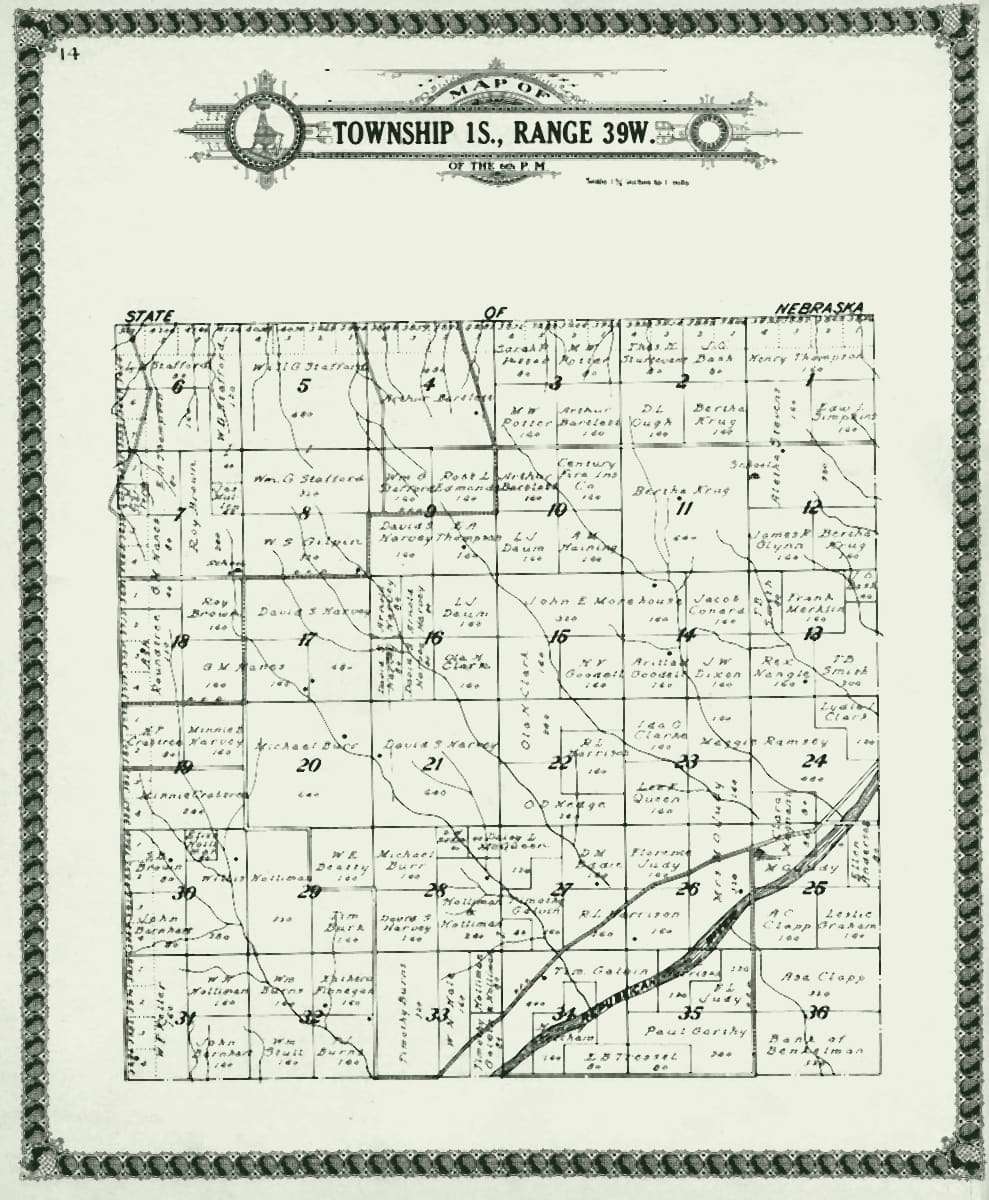
The drawings above put the campuses on the grid that most American farmland is still surveyed on. A section is a square mile, 640 acres; a quarter section is 160. Seen this way, the Michigan Stargate site fits inside a quarter section and a half, Microsoft’s first Fairwater phase is about half a section, and the original Hyperion site covers more than three and a half sections. If you know your land by its section and quarter, you can place it on this scale in your head.
What buyers have actually bought
Plans and announcements are one thing; signed deeds are another. Our land-price table records 38 reported data center land deals with acreage and price, each tied to a county record, filing or named report. Their sizes are a direct answer to the question of how much land buyers want, because that is how much they paid for.
Reported data center land deals by parcel size
- Under 50 acres2 of 7 by Amazon, Microsoft, Google or Meta7
- 50–99 acres3 of 7 by Amazon, Microsoft, Google or Meta7
- 100–249 acres6 of 12 by Amazon, Microsoft, Google or Meta12
- 250–499 acres4 of 6 by Amazon, Microsoft, Google or Meta6
- 500–999 acres4 of 5 by Amazon, Microsoft, Google or Meta5
- 1,000 acres or more0 of 1 by Amazon, Microsoft, Google or Meta1
The median parcel in the table is 168 acres. 14 deals were under 100 acres, mostly infill sites in established markets like Ashburn and Mesa where power and fiber already run past the gate. 6 deals were 500 acres or more, all of them rural or exurban, and all bought with years of phased construction in mind. The largest, a tract of more than 2,000 acres near Buckeye, Arizona, was bought as a long-term land bank.
The four largest cloud and AI companies — Amazon, Microsoft, Google and Meta — account for 19 of the deals. Their median parcel is 188 acres, against 160 for every other buyer, a smaller gap than most people would guess. The biggest single purchases do come from them, but so do some of the smallest: hyperscalers buy infill parcels next to their existing buildings as readily as they buy cornfields for new campuses. What separates the large purchases from the small ones is not who buys but whether the site starts from scratch.
These purchases also show how much land costs relative to everything else. At the USDA’s 2026 average value for US cropland, $6,020 an acre, 250 acres of farmland is worth about $1.5 million and a 1,200-acre campus site about $7.2 million as farmland. Data center buyers pay far more than farm value for land with power, as our land-price guide shows deal by deal, but even then the land is a small share of a project that costs billions. That is why developers buy more acreage than they strictly need: an extra few hundred acres is cheap insurance against running out of room next to a scarce power connection.
From one building to a gigawatt
With the campus table and the deal table side by side, the size classes look roughly like this. They are bands drawn from the evidence above, not a standard, and a specific site can fall outside them.
A single building
Enterprise data centers, edge sites and single colocation buildings can sit on a few acres to a few dozen acres of industrial land, especially where the building is multi-storey and power comes from an existing substation. The smallest deal in our table, in Ashburn, was 13 acres. TechTarget, summarising industry figures in 2025, put typical data center sites at a minimum of 10 acres and an average full-scale facility at about 40 acres. Most landowners who contact us with parcels in this range are next to a town or an industrial park, and the question is less whether the land is big enough than whether the substation has spare capacity.
A campus in the hundreds of megawatts
This is the band most developers outside the hyperscalers work in: 100 to 500 MW, built in phases over several years. On the densities in our table, it implies something like 50 to 300 acres depending on the market and the layout. TechTarget also cited Cushman & Wakefield’s finding that the average data center land transaction reached 224 acres in 2024, up 144% since 2022. That figure fits our own median.
A gigawatt campus
The newest AI campuses are measured in gigawatts and in square miles. Frontier in Texas is 1,200 acres for 1.4 GW of IT load; Amazon’s New Carlisle site is 1,200 acres; Meta’s El Paso site is about 1,000 acres; the original Hyperion site was 2,250. At these sizes the campus is effectively a new industrial district, with its own substations, sometimes its own generation, and a construction workforce in the thousands. Very few parcels of this size come from a single owner, which is why most gigawatt sites are assembled from several farms.
If you want to see where projects of each size are being built across the country, our sister site megawattlas.com tracks construction; here we stay with the land.
Rules that change how much land you need
Local rules are now one of the main things deciding how many acres a data center needs, because setbacks, buffers and noise limits all convert directly into land. They are also changing fast.
Loudoun County, Virginia, the largest data center market in the world, removed by-right data center development in March 2025. As Holland & Knight summarised, data centers there now need a special exception with public hearings before the planning commission and the board, and the grandfathering provision for pending applications applied only to data centers more than 500 feet from residential areas. Rules like that do not just slow a project down; they push buildings away from property lines and turn the outer part of a parcel into buffer.
Our restrictions table tracks these decisions across the US and abroad. It currently counts 7 US local zoning rules for data centers in force and 11 US moratoria in force. Some state and utility rules apply only above a size threshold, and those thresholds matter for land, because a developer may size a first phase to stay under one:
| Where | Measure | Applies from | Type | Status |
|---|---|---|---|---|
| Northern Taiwan (north of Taoyuan), Taiwan | Taiwan stops approving data centres above 5 MW north of Taoyuan | 5 MW | Grid limit | In force |
| South Korea | Distributed Energy Act introduces grid impact assessment for loads of 10 MW or more | 10 MW | Permit regime | In force |
| Oregon, United States | Oregon POWER Act creates separate rate class for users of 20 MW or more | 20 MW | Tariff / tax | In force |
| Maine, United States | Maine governor vetoes 18-month moratorium on data centres over 20 MW | 20 MW | Moratorium | Rejected |
| Ohio (AEP Ohio territory), United States | PUCO approves AEP Ohio data centre tariff with 85% minimum demand charge | 25 MW | Tariff / tax | In force |
| Australia | AEMC draft rule sets technical connection standards for data centres of 30 MW or more | 30 MW | Grid limit | Proposed |
| Scotland, United Kingdom | Scotland holds planning decisions on data centres over 50 MW pending new guidance | 50 MW | Moratorium | In force |
| Netherlands | Nine-month national hold on new hyperscale data centre applications | 70 MW | Moratorium | Expired |
| Netherlands | Decree bars hyperscale data centres across the Netherlands except two municipalities | 70 MW | Zoning | In force |
| Texas, United States | Texas SB 6 sets interconnection, cost and curtailment rules for loads of 75 MW or more | 75 MW | Grid limit | In force |
| Georgia, United States | Georgia PSC rule lets Georgia Power bill loads over 100 MW for their grid costs | 100 MW | Tariff / tax | In force |
In the US, those thresholds range from 20 MW to 100 MW. A project above the line faces a separate rate class, a minimum-demand charge or a longer study, and that can change how big the developer wants the first phase to be, and therefore how much land it wants to buy first. Our site selection guide covers these rules in more detail, including moratoria by county.
Shape, frontage and contiguity: what makes acres usable
Two parcels of the same size can be worth very different amounts to a developer, and size alone rarely explains it. These are the things that make acreage usable.
Shape. Data center buildings are long rectangles, often 1,000 feet or more, placed in rows with yards between them. A compact, roughly rectangular parcel fits them; a long thin strip or a parcel with a ragged boundary does not, even if the acreage looks right on paper.
Contiguity. Developers want one continuous site with a single fence line. Two blocks of land separated by a public road, a railway or a creek may count as two sites, each too small, unless the road can be vacated or crossed.
Frontage and access. Equipment arrives on oversized trucks. A parcel with frontage on a paved road that can take heavy loads is worth more than one reached by a farm lane or an easement through a neighbour’s land.
What lies underneath. Floodplain, wetlands, steep slopes and karst all reduce buildable acreage. Pipelines and existing utility easements through the middle of a parcel can split it in a way that kills the layout.
Distance to the line. The closer the parcel is to a substation with spare capacity, or to a high-voltage line where a new substation could tap in, the less land and money go into bringing power to the site. A parcel next to a 345 kV line can be worth more than a much bigger parcel ten miles away.
What this means if you own land
If you own land and wonder whether it is big enough for a data center, the short answer is that size is the second question. The first is whether the land can get power, and how much. A buyer will pay for acreage that sits next to an available power connection, and will walk away from acreage that does not, however large.
That said, size does decide which kind of buyer is interested. A parcel under about 50 acres near a town or an industrial park will interest developers of single buildings or small campuses, and its value depends almost entirely on local power. A parcel of 100 to 300 acres with a transmission line on or near it is in the range most campus developers look for. A parcel of 1,000 acres or more is rare enough that, if power can reach it, it can attract the largest buyers in the market. Our land-price guide shows what those buyers paid in each case.
If your land is smaller than the size class you are aiming for, it can still be part of a site. Many campuses in our tables were assembled from several farms. A developer, or the owners themselves, can combine parcels, and options are the usual tool: the developer pays each owner for the right to buy within a set period, while it secures zoning and power. An option ties up your land, so it should be reviewed by your own attorney before you sign; the terms that matter most are the length, the extension payments and what happens to rezoning work if the buyer walks away.
Two more points from experience. First, the developer will measure your land in buildable acres, not deeded acres. If a creek, a floodplain and a pipeline easement take a fifth of your parcel, expect the conversation to be about the remaining four fifths. Second, the acreage you think of as useless can matter. A corner next to the road may be exactly where a substation should go, and utilities buy substation sites as separate parcels, as the Twin Creeks example shows.
How to check your own parcel
You can do most of the first check yourself in an afternoon, with free public maps:
- Measure the buildable acreage. Start with the deeded acreage, then subtract floodplain (FEMA flood maps in the US), wetlands and streams, steep slopes and existing easements. Note the shape and whether the parcel is one continuous block.
- Find the nearest high-voltage line and substation. Utility maps, state energy offices and open grid datasets show transmission lines and substations. Note the distance and, if you can, the voltage: the tall steel or lattice towers matter, the wooden poles along the road usually do not.
- Check the county rules. Look for “data center” on your county’s planning commission and board agendas from the last two years, including any moratorium, special exception requirement or setback rule. Our restrictions table is a starting point, not a complete list of every township.
- Look at the neighbours. Who owns the land next to yours, and is it farmland of a similar size? A developer will look at the whole block, and a willing group of neighbours makes a stronger site than one owner alone.
- Write down what you know about water and fiber. A municipal water line, wells, or a fiber route along the road are all worth noting, though neither usually decides a deal the way power does.
- Send it to someone who will check the grid. That is what we do: when you send us a parcel, we look at the substations, lines, utility, local rules and flood maps around it and tell you honestly where it stands. Nothing is published or shared without your written consent, and if a buyer appears, you negotiate the terms with your own attorney.
The table of campuses on this page will grow as more developers publish site areas next to their power figures. If you know of a campus where both numbers are on the public record and we have missed it, send it through the form with the source and we will add it after checking.
Questions owners ask
How many acres does a data center need per megawatt?
Across the campuses in our footprint table that publish both acreage and power, the median is 0.47 acres per MW. Gigawatt campuses on open land sit higher, at a median of 0.86 acres per MW, while dense sites under 1 GW sit at a median of 0.18.
What is the minimum amount of land for a data center?
There is no legal minimum. A single enterprise or edge building can sit on a few acres of industrial land, and the smallest parcel in our deal table is 13 acres in Ashburn, Virginia. A campus that grows over several phases needs far more, because the substation, generator yards, stormwater ponds, roads and setbacks all take land the buildings never touch.
How big is a typical data center land purchase?
The median parcel among the 38 reported data center land deals in our table is 168 acres. Deals by Amazon, Microsoft, Google and Meta have a median of 188 acres, against 160 acres for every other buyer.
How much of a data center site is covered by buildings?
Less than most people expect. On the single-storey AI campuses in our table, building floor area equals a median of 8% of the land area. Multi-storey sites in Northern Virginia reach a median of 29%, because land there is scarce and expensive.
Is my land big enough for a data center?
Size is rarely the deciding question. A parcel of 50 to 100 acres with a substation that has spare capacity is worth more to a developer than 1,000 acres with no realistic path to power. If your land is smaller, neighbouring parcels can sometimes be assembled into one site, and an option agreement reviewed by your own attorney is the usual way to do that.
Sources: every document behind this guide is listed, with its date, on our Sources page.