1. Power: the first filter
Lawrence Berkeley National Laboratory estimates that US data centers used about 176 TWh in 2023, or 4.4% of all US electricity, and projects 6.7% to 12.0% by 2028. The scarce resource is no longer land or buildings; it is a firm date for a large connection. CBRE counted North American primary-market vacancy at 1.4% in H1 2026, with 80.4% of the 7,481 MW under construction already preleased, and Northern Virginia vacancy at 0.2%. JLL's 2026 outlook puts the average wait for a grid connection in primary markets at more than four years.
For a parcel, that comes down to four practical things.
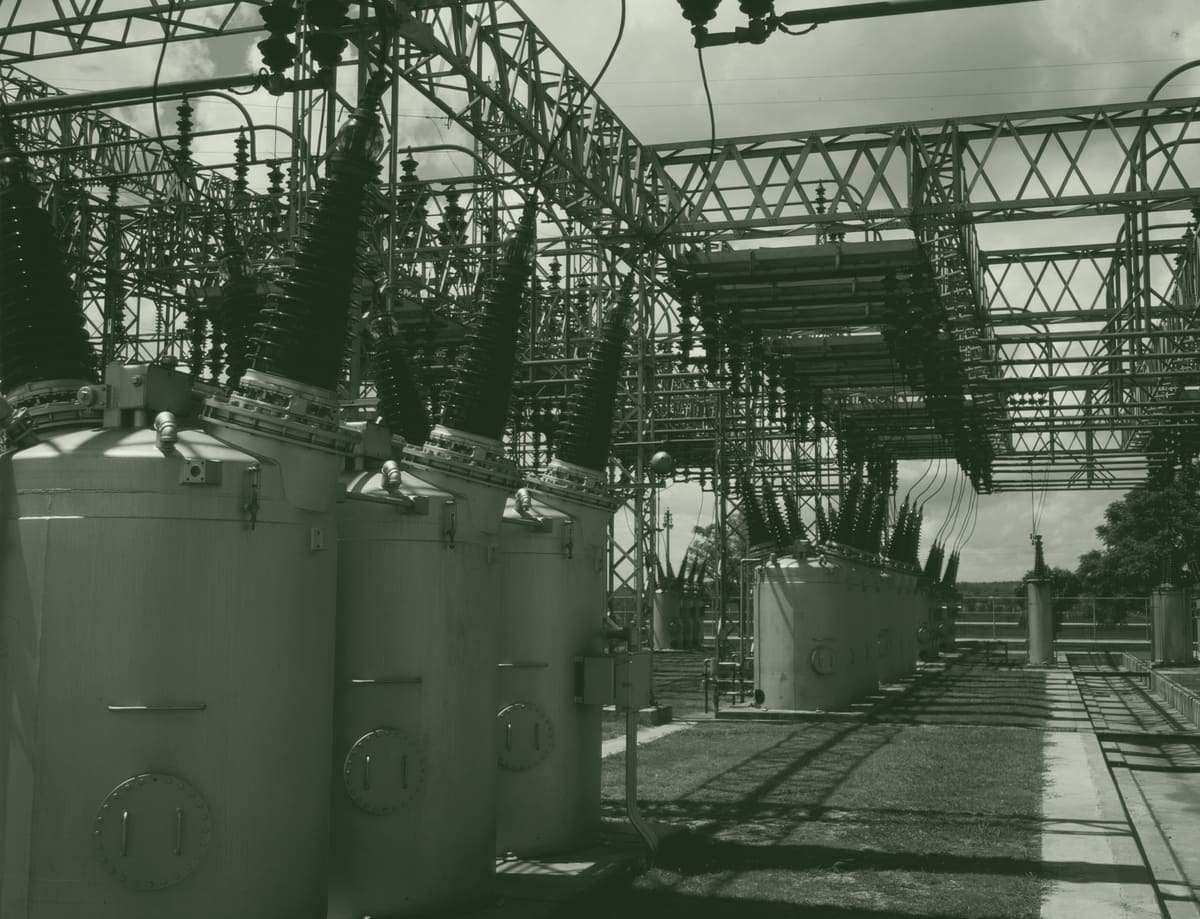
Distance to a substation with headroom
A substation that already exists, at transmission voltage, close enough to build a short dedicated line or a new switching station, is the single biggest value driver. "Close" depends on terrain and rights of way, which is why no serious developer quotes a universal mileage. What matters more than the distance is headroom: whether the substation and the lines feeding it can carry another large load without years of upgrades. Owners usually cannot see this from the road; the utility's load study answers it.
Transmission voltage
Campus-scale loads connect at transmission level rather than to local distribution lines. NERC's 2025 white paper on large loads compiles utility practice: Dominion Energy connects most data center loads at 230 kV and some at 115 or 138 kV, keeps 500 kV for bulk transfer, and caps load at 300 MW per substation; Salt River Project requires a 230 kV connection at 150 MW or more. In practice a parcel crossed by, or next to, a high-voltage line (the tall lattice or steel-pole lines, not the wooden poles along a county road) is worth looking at. The exact voltage tells a developer how much load could plausibly be served and which kind of substation would need to be built.
Interconnection queues — on both sides of the meter
Two queues matter. Generators wait to connect to supply power: LBNL's Queued Up report counts about 2,061 GW of generation and storage actively seeking interconnection at the end of 2025, more than the 1,374 GW the US fleet has installed. The median project built in 2025 took 61 months from request to operation, against 36 months in 2015 and 22 months in 2008, and only about 13% of the capacity that requested interconnection between 2000 and 2020 had been built by the end of 2025. That report counts generators only. Large loads queue separately with their utility, and those queues are just as crowded: ERCOT had about 474 GW of large-load requests by mid-2026, roughly 90% of them data centers, up from more than 233 GW at the end of 2025. In Virginia, Dominion told large customers in 2024 that connections over 100 MW could take up to about seven years, and in September 2026 it reported about 54 GW of data center capacity under contract against a data center billing peak of 4.8 GW. Regulators are now writing rules specifically for these loads.
Large-load tariffs and rules
The newest risk for a site is not a ban but a contract. Several states now make large loads commit to paying for capacity whether they use it or not, and to fund the grid upgrades built for them. These rules from our restrictions table apply to US large loads:
| Where | Rule | Threshold | Date | Status |
|---|---|---|---|---|
| Ohio (AEP Ohio territory) | PUCO approves AEP Ohio data centre tariff with 85% minimum demand charge | 25 MW | 2025-07-09 | In force |
| Texas | Texas SB 6 sets interconnection, cost and curtailment rules for loads of 75 MW or more | 75 MW | 2025-06-20 | In force |
| Oregon | Oregon POWER Act creates separate rate class for users of 20 MW or more | 20 MW | 2025-06 | In force |
| Georgia | Georgia PSC rule lets Georgia Power bill loads over 100 MW for their grid costs | 100 MW | 2025-01-23 | In force |
| Georgia | Georgia governor vetoes bill suspending data centre sales tax exemptions | — | 2024-05 | Rejected |
| Loudoun County, Virginia | Dominion Energy pauses new data centre connections in eastern Loudoun County | — | 2022-07 | Lifted |
6 rules. The primary source for every row is on the Sources page.
For developers these rules change the math of land banking: a reservation for capacity that is not used for years now has a carrying cost. For owners they mean a buyer will want proof of the utility's position — a will-serve letter or a completed study — before paying a power premium.
2. Water
Cooling design decides how much water a site needs, and it varies from close to nothing (closed-loop and air-cooled designs) to large evaporative volumes. LBNL puts direct water consumption by US data centers at about 66 billion liters in 2023, up from 21.2 billion in 2014, with hyperscale and colocation facilities accounting for 84% of it.
Water has become a permitting issue in its own right. 4 rules in force in our table mention water explicitly, among them:
- Johor (2025-11): Johor halts approvals for Tier 1 and Tier 2 data centres over water use.
- Thailand (2026-09-04): Thailand pauses 166 data centre projects while national standards are written.
- Marana, Arizona (2024-12): Marana bars potable water for data centre cooling and requires rezoning.
- Tucson, Arizona (2025-08): Tucson requires council approval and conservation plans for large water users.
For a landowner, a municipal line at the road, wells with rights attached, or access to reclaimed water all help. For a developer, a site where a dry-cooling design is accepted by the county can be worth more than one with water rights and an angry public hearing.
3. Fiber and latency
Fiber is the easiest criterion to fix with money: new long-haul and lateral routes can be built in far less time than a transmission substation. What still matters is how many independent routes reach the site (diversity), how far it is to a carrier hotel or internet exchange, and what workload the campus is for.
Latency follows distance. Light in optical fiber travels at roughly two-thirds of its speed in a vacuum — about 5 microseconds per kilometre one way — so round-trip delay grows with every route-kilometre to the users or other data centers a facility must talk to. Workloads differ sharply in how much that matters: training large AI models happens inside a campus and tolerates remote locations; serving cloud regions, trading or interactive applications does not. That split is one reason large AI campuses are being sited in rural areas with power, while colocation keeps clustering in metro markets.
4. Zoning and local opposition
This is where most parcels with good power still fail. Counties that once welcomed data centers by right are moving to discretionary approval, and moratoria are spreading from a handful of places to dozens. In our restrictions table, US jurisdictions adopted or voted on 12 moratoria in 2026 alone, and 11 US moratoria are in force today. The heaviest market of all is changing the rules too: Loudoun County, Virginia, removed by-right data center development in March 2025 and voted for a 12-month pause on new applications in September 2026; neighbouring Prince William County ended by-right development countywide in September 2026.
Opposition is measurable. Data Center Watch counted $64 billion of US projects blocked ($18 billion) or delayed ($46 billion) by local opposition between May 2024 and March 2025, with at least 142 activist groups in 24 states; for April–June 2026 alone it counted at least 45 projects worth nearly $68 billion.
US moratoria and zoning restrictions currently in force:
| Jurisdiction | Type | What it does | Date |
|---|---|---|---|
| Prince William County, Virginia | Zoning | Prince William County ends by-right data centre development countywide | 2026-09-22 |
| Steuben County, Indiana | Moratorium | Steuben County formalises six-month moratorium on data centre construction | 2026-09-15 |
| Loudoun County, Virginia | Moratorium | Loudoun County votes to pause new data centre applications for 12 months | 2026-09 |
| Indianapolis / Marion County, Indiana | Moratorium | Indianapolis pauses new data centres in Marion County through 2027 | 2026-08-19 |
| Lochbuie, Colorado | Moratorium | Lochbuie passes five-year moratorium on data centres | 2026-07-21 |
| New York | Moratorium | New York pauses state permits for new hyperscale data centres (Executive Order 62) | 2026-07-14 |
| Prince George's County, Maryland | Moratorium | Prince George's County passes two-year moratorium on hyperscale data centres | 2026-07-07 |
| Pasco, Washington | Moratorium | Pasco approves six-month moratorium on data centre development permits | 2026-07 |
| Denver, Colorado | Moratorium | Denver adopts one-year moratorium on new data centre permits | 2026-05-18 |
| Lyon Township, Michigan | Moratorium | Lyon Township enacts 180-day data centre moratorium | 2026-05 |
| Monterey Park, California | Moratorium | Monterey Park extends data centre moratorium and sends permanent ban to voters | 2026-03-04 |
| Madison, Wisconsin | Moratorium | Madison pauses zoning approvals for data centres over 10,000 sq ft | 2026-01-13 |
| Phoenix, Arizona | Zoning | Phoenix requires a special permit for new data centres | 2025-07-02 |
| Loudoun County, Virginia | Zoning | Loudoun County eliminates by-right data centre development | 2025-03-18 |
| Marana, Arizona | Zoning | Marana bars potable water for data centre cooling and requires rezoning | 2024-12 |
| Fairfax County, Virginia | Zoning | Fairfax County adopts stricter data centre zoning standards | 2024-09-10 |
| Atlanta, Georgia | Zoning | Atlanta bans data centres near the Beltline and MARTA rail stations | 2024-09-02 |
| Chandler, Arizona | Zoning | Chandler restricts data centres to PAD zoning with noise and notification rules | 2022-12-05 |
18 entries in force. Lifted, expired and rejected measures are kept in the full table for history.
Outside the US, the pattern is grid- and permit-led rather than county-led. In force today:
| Country | Area | Type | Measure | Date |
|---|---|---|---|---|
| China | National | Permit regime | China tells local governments to stop disorderly data centre development | 2021-12 |
| Denmark | National | Grid limit | Energinet replaces first-come connections with batch model; no new deals before autumn | 2026-05-27 |
| Finland | National | Tariff / tax | Finland moves data centres to the general electricity tax category | 2025-10 |
| Germany | National | Permit regime | Energy Efficiency Act (EnEfG) sets PUE and waste-heat rules for data centres | 2023-09-21 |
| Germany | Frankfurt am Main | Zoning | Frankfurt steers colocation and cloud data centres into designated suitability areas | 2022-06 |
| Ireland | National | Grid limit | CRU Large Energy Users connection policy for new data centres (CRU/2025236) | 2025-12-12 |
| Ireland | Dublin | Grid limit | EirGrid stops accepting new data centre connection applications in Dublin | 2022-01 |
| Malaysia | National | Permit regime | Malaysia confirms new non-AI data centre applications have been stopped | 2026-02-24 |
| Malaysia | Johor | Permit regime | Johor halts approvals for Tier 1 and Tier 2 data centres over water use | 2025-11 |
| Malaysia | Johor | Permit regime | Johor sets up committee to vet data centre applications on water and power | 2024-06 |
| Netherlands | Amsterdam | Zoning | Amsterdam stops allowing new data centres and expansions | 2025-04 |
| Netherlands | National | Zoning | Decree bars hyperscale data centres across the Netherlands except two municipalities | 2023-12-20 |
| Norway | National | Permit regime | Norway requires data centres to register with the telecom regulator | 2025-01-01 |
| Singapore | National | Permit regime | Second Data Centre Call for Application (DC-CFA2) offers at least 200 MW | 2025-12-01 |
| Singapore | National | Permit regime | Green Data Centre Roadmap ties new capacity to efficiency and green energy | 2024-05-30 |
| Singapore | National | Permit regime | Pilot Data Centre Call for Application replaces the moratorium | 2022-07-20 |
| South Korea | National | Permit regime | Distributed Energy Act introduces grid impact assessment for loads of 10 MW or more | 2024-06-14 |
| Sweden | National | Tariff / tax | Sweden abolishes reduced electricity tax for data centres | 2023-07-01 |
| Taiwan | Northern Taiwan (north of Taoyuan) | Grid limit | Taiwan stops approving data centres above 5 MW north of Taoyuan | 2024-08 |
| Thailand | National | Moratorium | Thailand pauses 166 data centre projects while national standards are written | 2026-09-04 |
| United Kingdom | Scotland | Moratorium | Scotland holds planning decisions on data centres over 50 MW pending new guidance | 2026-09-16 |
| United Kingdom | West London (Hillingdon, Ealing, Hounslow) | Grid limit | West London grid reaches capacity; new connections told to wait until 2035 | 2022-07 |
22 measures in force outside the US.
What a buyer looks for on a specific parcel: current zoning (industrial or a data-center overlay is best; agricultural land usually needs rezoning), the distance to the nearest homes, whether the county has a pending ordinance, and how the last rezoning hearing for a similar project went. A landowner can find most of this in county board agendas before talking to anyone.
5. Tax incentives
Incentives rarely make a site, but they can break a tie between two that have power. In US states the main instrument is a sales and use tax exemption on servers and equipment — 34 of the 37 US programs in our table take that form, and because servers are replaced every few years, the exemption keeps applying long after the land is bought. Our table lists 37 US programs across 34 states; 34 are active. Thresholds vary widely: the lowest published minimum investment among active programs is $2.0M (Maryland), the highest $500M (Texas), and 8 active programs set no investment minimum. Job requirements run up to 100 new jobs (New Jersey). Incentives also move: Illinois (suspended), Nebraska (repealed), Ohio (suspended) show that a program can be paused or ended while a project is in planning.
| State | Program | Type | Min. investment | Min. jobs | Sunset | Status |
|---|---|---|---|---|---|---|
| Alabama | Alabama Data Processing Center Economic Incentive Enhancement Act (2012) | Sales & use tax exemption | none set | 20 | — | Active |
| Arizona | Computer Data Center tax relief (A.R.S. § 41-1519) | Sales & use tax exemption | $25.0M | — | 2033-12-31 | Active |
| Arkansas | Qualified Data Center / Qualified Large Data Center sales and use tax exemption (Act 548 of 2025) | Sales & use tax exemption | $100M | — | — | Active |
| Connecticut | Incentives for Qualified Data Centers (Public Act 21-1) | Sales & use tax exemption | $50.0M | — | — | Active |
| Florida | Data center property sales tax exemption (s. 212.08(5)(s), F.S.; amended by H.B. 7031 of 2025) | Sales & use tax exemption | $150M | — | 2037-06-30 | Active |
| Georgia | High-Technology Data Center Equipment sales and use tax exemption (O.C.G.A. § 48-8-3(68.1)) | Sales & use tax exemption | $25.0M | 5 | — | Active |
| Idaho | Data center sales tax exemption (Idaho Code § 63-3622VV) | Sales & use tax exemption | $250M | 30 | — | Active |
| Illinois | Data Center Investment Program | Sales & use tax exemption | $250M | 20 | — | Suspended |
| Indiana | Data Center Gross Retail and Use Tax Exemption (IC 6-2.5-15) | Sales & use tax exemption | none set | — | — | Active |
| Iowa | Data Center Sales and Use Tax Incentives (Iowa Code §§ 423.3(95), 423.4(7)-(8)) | Sales & use tax exemption | $200M | — | — | Active |
| Kansas | SB 98 Data Center Sales Tax Exemption | Sales & use tax exemption | $250M | 20 | — | Active |
| Kentucky | Qualified Data Center Project Incentive Program (KRS 154.20-220 et seq.) | Sales & use tax exemption | $25.0M | — | — | Active |
| Maryland | Data Center Maryland Sales and Use Tax Exemption Incentive Program | Sales & use tax exemption | $2.0M | 5 | — | Active |
| Michigan | Enterprise Data Center Sales and Use Tax Exemption | Sales & use tax exemption | $250M | 30 | 2050-12-31 | Active |
| Minnesota | Qualified Data Center sales tax exemption | Sales & use tax exemption | $30.0M | — | 2042-06-30 | Active |
| Minnesota | Qualified Large-Scale Data Center sales tax exemption (Laws 2025, ch. 12) | Sales & use tax exemption | $250M | — | — | Active |
| Mississippi | Data center sales/use, income and franchise tax exemptions (S.B. 2271, Laws 2019) | Sales & use tax exemption | $20.0M | 20 | — | Active |
| Missouri | Data Center Sales Tax Exemption Program (RSMo § 144.810) | Sales & use tax exemption | $25.0M | 10 | — | Active |
| Montana | Class seventeen property — qualified data centers (MCA 15-6-162) | Property tax abatement | $50.0M | — | — | Active |
| Nebraska | Data center sales and use tax exemption (Neb. Rev. Stat. § 77-2704.62) and personal property tax exemption | Sales & use tax exemption | none set | — | 2026-07-01 | Repealed |
| Nevada | Nevada Data Center Tax Abatements (NRS 360.754) | Property tax abatement | $25.0M | 10 | — | Active |
| New Jersey | Next New Jersey Program – AI | Income tax credit | $100M | 100 | — | Active |
| North Carolina | Qualifying datacenter / eligible Internet datacenter sales and use tax exemptions | Sales & use tax exemption | none set | — | — | Active |
| North Dakota | Data center sales tax exemption (N.D.C.C. § 57-39.2-04.17) | Sales & use tax exemption | none set | — | — | Active |
| Ohio | Computer data center sales tax exemption (Ohio Tax Credit Authority) | Sales & use tax exemption | none set | — | — | Suspended |
| Oklahoma | Oklahoma data center sales tax and property tax exemptions | Sales & use tax exemption | none set | — | — | Active |
| Pennsylvania | Computer Data Center Equipment Exemption Program | Sales & use tax exemption | $75.0M | 25 | — | Active |
| South Carolina | Datacenter sales and use tax exemption (S.C. Code § 12-36-2120(79)) | Sales & use tax exemption | $50.0M | 25 | 2031-12-31 | Active |
| Tennessee | Qualified data center sales and use tax exemption | Sales & use tax exemption | $100M | 15 | — | Active |
| Texas | Qualifying Data Center state sales tax exemption | Sales & use tax exemption | $200M | 20 | — | Active |
| Texas | Qualifying Large Data Center Project state sales tax exemption | Sales & use tax exemption | $500M | 40 | — | Active |
| Utah | Qualifying data center sales and use tax exemption (Utah Code § 59-12-104(84)) | Sales & use tax exemption | none set | — | — | Active |
| Virginia | Data center retail sales and use tax exemption (Va. Code § 58.1-609.3(18)) | Sales & use tax exemption | $150M | 50 | 2035-06-30 | Active |
| Washington | Rural county data center sales and use tax exemption (RCW 82.08.986) | Sales & use tax exemption | none set | 35 | 2048-07-01 | Active |
| Washington | Data center sales and use tax exemption for counties over 800,000 population (RCW 82.08.9861) | Sales & use tax exemption | none set | — | 2038-07-01 | Active |
| Wisconsin | Data Center Sales and Use Tax Exemption | Sales & use tax exemption | $50.0M | — | — | Active |
| Wyoming | Data processing services center sales tax exemption (W.S. § 39-15-105(a)(viii)(S)) | Sales & use tax exemption | $5.0M | — | — | Active |
"None set" means the program publishes no investment minimum (other conditions may apply); "—" means no job minimum is published. Primary sources for every program: Sources page.
Outside the US, incentives take other forms — income-tax holidays, investment allowances and electricity-tax relief:
- Malaysia — Digital Ecosystem Acceleration Scheme (DESAC) — Digital Infrastructure Providers Active
- Thailand — BOI investment promotion — Data center (activity 8.2.1) Active
- India — Union Budget 2026–27 tax holiday for foreign cloud providers using India-based data centres Proposed
- India, Uttar Pradesh — Uttar Pradesh Data Centre Policy 2026 Active
- India, Tamil Nadu — Tamil Nadu Data Centre Policy 2021 Active
- Brazil — REDATA — Regime Especial de Tributação para Serviços de Datacenter (Medida Provisória nº 1.318/2025) Expired
- France — Reduced electricity excise rate for data storage centres (art. L. 312-70 CIBS, formerly TICFE) Active
- Finland — Electricity tax class II for data centres Repealed
- United Kingdom — AI Growth Zones — electricity cost discount Proposed
- Saudi Arabia — Cloud Computing Special Economic Zone Active
6. Climate and natural hazards
Climate affects both risk and running cost. Cooler and drier air allows more hours of free cooling; heat and humidity push designs toward mechanical or liquid cooling. Hazards are screened parcel by parcel: flood zones (in the US, FEMA flood maps are the starting point), wildfire exposure, seismic zones, tornado and hurricane tracks. A parcel partly in a flood zone is not disqualified, but the buildable area shrinks, and that changes how many megawatts the land can hold.
7. Labor and construction
Large campuses need big construction crews for several years — electricians and mechanical trades above all — and a much smaller permanent staff. Developers look at the travel distance to a labor pool, competing megaprojects in the region, and housing. Incentive rules show the operating side: job minimums in active US programs range from a handful to 100. Counties weigh both when they decide whether a project is worth the strain on roads and services.
A checklist for landowners
You do not need an engineer to make a first assessment. If you can answer most of these, your land is worth a closer look:
- Is there a high-voltage transmission line on or next to the parcel, and do you know its voltage?
- How far is the nearest substation, and which utility or co-op owns it?
- Is the parcel large and contiguous, or could it be combined with neighbours who would also sell?
- What is it zoned now, and has your county paused or restricted data centers? (Check the table above.)
- Is there water service, and a fiber route along the road?
- Is any of it in a flood zone?
Unknown answers are fine — finding them is what we do when you send us the land. To see which projects are already being built in your region, the tracker at megawattlas.com maps them.
Every figure on this page is traced to its document on our Sources page.